HealFern may earn a commission if you buy through links on this page, at no extra cost to you. That does not change what we report.
Part of our Nervovive overview. Last checked November 5, 2026.
Nervovive ingredients are five herbs totaling 900 mg per two-capsule serving: passion flower, marshmallow root, Corydalis lutea, prickly pear and California poppy seed[1]. The label prints every dose. None of the five has a human trial for neuropathy, nerve pain or nerve repair in the sources we read.
Three are calming or sedating herbs, and prickly pear is studied for blood sugar. The other ingredients are magnesium stearate, gelatin and rice flour, so the capsules are not vegetarian[1].
Nervovive ingredients at a glance
The table shows each ingredient as printed on the label, read November 5, 2026, with the main use it has been studied for and our evidence grade for nerve claims. All five doses are disclosed, which is uncommon in this category.
| Ingredient (label amount) | Studied mainly for | Dose disclosed? | Evidence grade |
|---|---|---|---|
| Passion flower herb powder, 290 mg | Anxiety and sleep | Yes | Limited for calm; weak for nerve pain |
| Marshmallow root powder, 220 mg | Cough, sore throat, skin | Yes | No evidence for nerves or calm |
| Corydalis lutea 4:1, 200 mg | Pain (other species, mostly lab work) | Yes | Weak |
| Prickly pear 20:1, 100 mg | Blood sugar, blood pressure | Yes | No evidence for nerves or calm |
| California poppy seed, 90 mg | Anxiety, in a combination | Yes | Limited for calm; weak for nerve pain |
Grades come from the human studies summarized below. A "weak" grade means animal, cell or indirect data only.
What is in each ingredient, and what does research say?
Each herb below has some research, but none of it tests nerve repair in people, and almost none uses the label's dose or form. Here is what each one is and what human studies found.
Passion flower (Passiflora incarnata), 290 mg
Passion flower is a climbing vine used for anxiety and sleep. A systematic review of 9 trials found most reported less anxiety and no adverse effects[5]. In a 36-patient pilot trial, 45 drops a day of extract matched oxazepam for generalized anxiety over 4 weeks[6], and a trial in 110 adults with insomnia found longer total sleep[7].
Neuralgia is a traditional use only[8]. NCCIH says there is not enough evidence for pain conditions such as fibromyalgia[4]. Grade: limited for calm and sleep, weak for nerve pain.
Marshmallow root (Althaea officinalis), 220 mg
Marshmallow root is rich in mucilage, a gel that coats and soothes. Research covers cough and sore throat, mostly in herb combinations[9], and a 1% skin ointment that beat 1% hydrocortisone in a small pediatric eczema trial[10]. Oral doses are not established in the sources read, and no human trial covers nerves or calm.
Corydalis lutea 4:1, 200 mg
Corydalis research is almost entirely on Corydalis yanhusuo, the species the vendor cites[3]. The label names Corydalis lutea, yellow corydalis, a different plant[1]. For C. yanhusuo, pain claims rest on animal and cell work[11], and neuropathic pain appears only within multi-herb formulas[13]. Its alkaloid l-THP blocks dopamine D1 and D2 receptors[12]. No standardized human dose exists in the sources read. Grade: weak.
Prickly pear (Opuntia ficus-indica) 20:1, 100 mg
Prickly pear is the nopal cactus. A systematic analysis found the cladode, the flat pad, showed promise for lowering glucose, while fruit products mostly had no effect, and both had high risk of bias[16]. A meta-analysis found lower body fat, blood pressure and total cholesterol but no change in body weight[17]. A trial used 5 g a day of nopal powder[18], far more than 100 mg of a 20:1 extract. The label does not name the plant part.
California poppy (Eschscholzia californica) seed, 90 mg
California poppy is a calming herb. Mouse studies found anxiety-reducing effects at 25 mg/kg and sedation above 100 mg/kg[15]. In humans it was tested only in a fixed mix with hawthorn and magnesium, which beat placebo for mild to moderate anxiety[14]. The label does not say whether "seed" means seed or aerial parts. Grade: limited for calm, weak for nerve pain.
How transparent is the Nervovive formula?
The Nervovive formula is transparent on doses: the label lists all five amounts, and they add up to the stated 900 mg (290 + 220 + 200 + 100 + 90)[1]. The sales page calls it "an optimally dosed proprietary blend"[2], which is wrong, because a proprietary blend hides individual doses.
Some details are missing from the label:
- The plant part used for corydalis and prickly pear
- Any standardization, such as alkaloid content
- Whether "California Poppy Seed" is seed or aerial parts
Ratios such as 4:1 and 20:1 describe how much raw herb went into the extract, not the active compound level. When third-party sites list different ingredients, trust the vendor label. We read it November 5, 2026.
Ingredient safety and interactions
The main safety issue is drowsiness. NCCIH lists drowsiness, dizziness and confusion for passion flower and advises avoiding it in pregnancy[4]. California poppy and corydalis can add to sedatives, and prickly pear may add to diabetes and blood pressure medicines[16][17].
The label warns against use under 18, in pregnancy or while nursing[1]. The vendor FAQ contradicts that by calling it "designed for all ages and medical conditions"[19]. Our Nervovive side effects guide covers each risk and the medicines to check with a pharmacist.
Do these ingredients prove Nervovive works?
No. The ingredients show that Nervovive may have a calming or sleepy effect, not that it helps neuropathy. No herb in the formula has a human trial for nerve repair, and the one with the best data, passion flower, was tested in other forms and doses.
A product trial would settle the question, and we found none. Our does Nervovive work guide compares each vendor claim with the evidence, and the dosage guide covers the 2-capsule serving.
Back to the Nervovive overview.
Frequently asked questions
What are the ingredients in Nervovive?
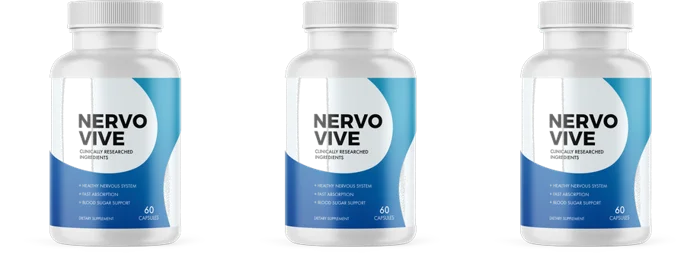
Nervovive lists five herbs per 2 capsules: passion flower 290 mg, marshmallow root 220 mg, Corydalis lutea 4:1 200 mg, prickly pear 20:1 100 mg and California poppy seed 90 mg. Other ingredients are magnesium stearate, gelatin and rice flour.
Is Nervovive a proprietary blend?
No. The sales page calls it a proprietary blend, but the label prints every dose, adding up to 900 mg per serving. The label does not state plant parts for corydalis and prickly pear or any standardization of active compounds.
Is Nervovive vegetarian?
No. The label lists gelatin among the other ingredients, along with magnesium stearate and rice flour. Gelatin comes from animals, so the capsules do not suit vegetarians or vegans, based on the label we read November 5, 2026.
Which corydalis is in Nervovive?
The label names Corydalis lutea, yellow corydalis. The vendor references page cites research on Corydalis yanhusuo, a different species. Most corydalis pain research covers C. yanhusuo, and it is mostly animal and cell work.
Does Nervovive contain stimulants or caffeine?
No stimulants appear on the label. The five herbs lean the other way: passion flower, California poppy and corydalis have calming or sedating effects, so drowsiness is the more likely issue than feeling wired.
Sources
- Nervovive Supplement Facts label. Nervovive, read November 5, 2026.
- Nervovive sales page, text version. Nervovive, read November 5, 2026.
- Nervovive references page. Nervovive, read November 5, 2026.
- Passionflower. National Center for Complementary and Integrative Health (NIH), read October 20, 2026.
- Systematic review of 9 passionflower trials for anxiety (PMID 33352740). PubMed, read October 20, 2026.
- Passionflower vs oxazepam for generalized anxiety, pilot randomized trial (PMID 11679026). PubMed, read October 20, 2026.
- Passionflower for insomnia, randomized trial in 110 adults (PMID 31714321). PubMed, read October 20, 2026.
- Passiflora incarnata: traditional uses and clinical evidence (PMID 24140586). PubMed, read October 20, 2026.
- Marshmallow (Althaea officinalis) mucilage, cough and sore throat, literature summary (PMID 31770755). PubMed, read October 20, 2026.
- Marshmallow ointment vs hydrocortisone in children with atopic dermatitis (PMID 33034099). PubMed, read October 20, 2026.
- Corydalis alkaloids and pain, pharmacology overview (PMID 34946576). PubMed, read October 20, 2026.
- l-Tetrahydropalmatine as a dopamine D1/D2 antagonist (PMID 22300097). PubMed, read October 20, 2026.
- Most-used Chinese herbs for pain, including corydalis (PMID 32054304). PubMed, read October 20, 2026.
- Hawthorn, California poppy and magnesium combination for mild to moderate anxiety, randomized trial (PMID 14741074). PubMed, read October 20, 2026.
- Sedative and anxiolytic effects of California poppy in mice (PMID 1680240). PubMed, read October 20, 2026.
- Prickly pear (Opuntia) and glucose, systematic analysis (PMID 31096667). PubMed, read October 20, 2026.
- Prickly pear and body weight, fat, blood pressure and cholesterol, meta-analysis of randomized trials (PMID 25837206). PubMed, read October 20, 2026.
- Nopal powder for 24 weeks and bone density in women aged 40 to 60, randomized trial (PMID 32160071). PubMed, read October 20, 2026.
- Nervovive contact and FAQ page. Nervovive, read November 5, 2026.
This page is general information, not medical advice. Dietary supplements are not reviewed by the FDA for safety or effectiveness before they are sold and are not intended to diagnose, treat, cure or prevent any disease. Talk to your doctor before taking any supplement, especially if you are pregnant, nursing, take medication or have a health condition.